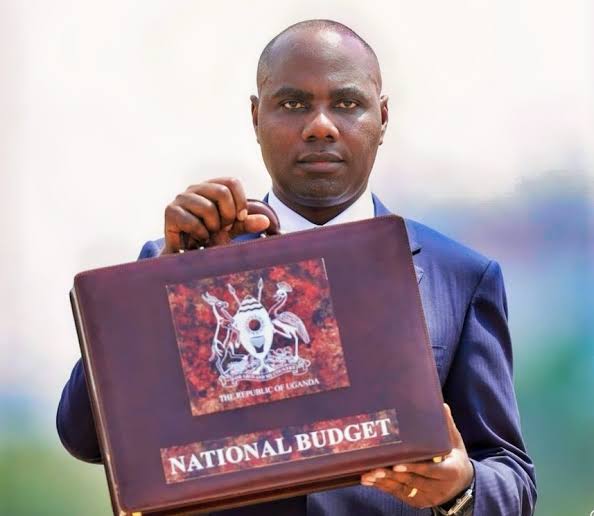

Uganda Budget Speech Financial Year 2026/2027: Key Priorities, Allocations, Tax Measures and Economic Outlook
Published: June 11, 2026
Financial Year: 2026/2027
Country: Uganda
Budget: UGX 84.39 trillion
Budget Theme: Full Monetisation of Uganda’s Economy through Commercial Agriculture, Industrialisation, Expanding and Broadening Services, Digital Transformation and Market Access.
Uganda Budget Speech 2026/2027
Uganda’s National Budget for the Financial Year 2026/2027 amounts to approximately UGX 84.39 trillion, marking a UGX 2.78 trillion increase from the revised FY2025/26 budget of UGX 81.61 trillion.
The Budget was presented to Parliament on 11 June 2026 at Kololo Independence Grounds by Henry Musasizi, Minister of Finance, Planning and Economic Development, on behalf of the Government of Uganda.
The FY2026/27 Budget is focused on accelerating economic transformation, increasing household incomes, creating productive employment, expanding private-sector activity and supporting Uganda’s long-term Tenfold Growth Strategy.
The official budget theme is:
“Full Monetisation of Uganda’s Economy through Commercial Agriculture, Industrialisation, Expanding and Broadening Services, Digital Transformation and Market Access.”
The Government says the strategy is intended to move more households and businesses from subsistence activity into the money economy while increasing production, productivity, value addition, exports and investment.
Uganda FY2026/27 Budget at a Glance
| Indicator | FY2026/27 |
|---|---|
| Total Budget | UGX 84.39 trillion |
| Revised FY2025/26 Budget | UGX 81.61 trillion |
| Increase | UGX 2.78 trillion |
| Projected economic growth | 10.2% |
| Projected domestic revenue | UGX 45.6 trillion |
| Tax revenue | UGX 40.16 trillion |
| Non-tax revenue | UGX 4.02 trillion |
| Petroleum revenue | UGX 1.44 trillion |
| Domestic borrowing | UGX 11.97 trillion |
| External project financing | UGX 11.27 trillion |
| Development expenditure | UGX 22.05 trillion |
| Wage and salary expenditure | UGX 9.71 trillion |
| Domestic debt refinancing | UGX 13.97 trillion |
The official Budget Speech puts the total resource envelope at UGX 84.391743 trillion.
What Is the Theme of Uganda’s 2026/27 Budget?
The theme of the FY2026/27 Budget is:
Full Monetisation of Uganda’s Economy through Commercial Agriculture, Industrialisation, Expanding and Broadening Services, Digital Transformation and Market Access.
The theme is built around increasing participation in Uganda’s formal and commercial economy.
The Government’s approach is closely connected to the Tenfold Growth Strategy, which seeks to expand Uganda’s economy dramatically over the long term.
The strategy places particular emphasis on four major growth engines known as ATMS:
- Agro-Industrialisation
- Tourism Development
- Mineral-Based Industrial Development, including Oil and Gas
- Science, Technology and Innovation, including ICT and Creative Industries
Government is also prioritising key enablers such as infrastructure, human capital, security, governance, domestic revenue mobilisation and market access.
Uganda’s Economic Outlook for 2026/27
The Government projects that Uganda’s economy will grow by 10.2% in FY2026/27.
Economic growth for FY2025/26 is estimated at 6.4%, compared with 6.3% in FY2024/25.
The economy is projected to reach approximately US$69.3 billion, equivalent to about UGX 250.4 trillion, by the end of June 2026.
GDP per capita is projected at approximately US$1,420.
The Government expects stronger growth in FY2026/27 to be supported by commercial oil production, investment, exports, infrastructure development, industrialisation and increased productivity.
Inflation is estimated at an average of 3.8% for FY2025/26, compared with 3.5% in the previous financial year.
Uganda’s foreign exchange reserves stood at approximately US$6 billion in the 12 months to March 2026, according to the Budget Speech.
How Much Is Uganda’s 2026/27 National Budget?
Uganda’s FY2026/27 national budget is approximately:
UGX 84.39 trillion
The budget is UGX 2.78 trillion higher than the revised FY2025/26 budget of UGX 81.61 trillion.
The Government expects to finance the budget through domestic revenue, domestic borrowing, petroleum revenue and external financing.
Domestic revenue is projected to reach approximately UGX 45.96 trillion, including:
- UGX 40.16 trillion in tax revenue
- UGX 4.02 trillion in non-tax revenue
- UGX 1.44 trillion in petroleum revenue
- UGX 339.8 billion in Local Government revenue
Other financing includes approximately UGX 11.97 trillion in domestic borrowing, UGX 13.97 trillion in domestic debt refinancing, UGX 1.22 trillion in external borrowing for general budget financing and UGX 11.27 trillion in external project financing.
Major Spending Priorities in Uganda’s 2026/27 Budget
The FY2026/27 Budget places significant emphasis on productive sectors and the infrastructure and human-capital systems needed to support economic transformation.
Key allocations include:
| Sector / Programme | Allocation |
| Human Capital Development | UGX 13.56 trillion |
| Security, Governance & Rule of Law | UGX 10.21 trillion |
| Transport Infrastructure | UGX 8.79 trillion |
| Education, Skills & Sports | UGX 6.66 trillion |
| Health | UGX 5.23 trillion |
| Agro-Industrialisation | UGX 2.26 trillion |
| Energy Development | UGX 2.07 trillion |
| Science, Technology, Innovation, ICT & Creatives | UGX 1.14 trillion |
| Manufacturing | UGX 1.03 trillion |
| Water & Sanitation | UGX 1.013 trillion |
| Tourism Development | UGX 567.32 billion |
| Mineral-Based Industrial Development, Mining, Oil & Gas | UGX 473.51 billion |
| Administration of Justice | UGX 665.55 billion |
| Social Protection | UGX 173.55 billion |
The figures come from the FY2026/27 Budget Speech and represent the Government’s stated priorities for the financial year.
1. Agro-Industrialisation
Agriculture remains one of the most important components of Uganda’s economic transformation strategy.
The Government has allocated UGX 2.26 trillion to the agro-industrialisation programme for FY2026/27 — described in the Budget Speech as the highest allocation ever made to the programme.
The Government’s objective is to move Uganda beyond exporting raw agricultural commodities towards processing, value addition and higher-value exports.
Key agricultural priorities include:
- Agricultural research and innovation
- Commercialisation of the anti-tick vaccine
- Irrigation and water for production
- Agricultural extension services
- Quality agricultural inputs
- Post-harvest handling and storage
- Agro-processing
- Value addition
- Quality assurance and certification
- Expanding domestic and export markets
The Government is also focusing on coffee, livestock, agricultural mechanisation and climate-resilient production.
What this means for Ugandan farmers and businesses
The agriculture strategy creates opportunities for businesses involved in:
- Food processing
- Coffee processing
- Dairy processing
- Grain storage
- Cold-chain logistics
- Agricultural machinery
- Irrigation
- Packaging
- Export certification
- Agricultural technology
- Animal health
- Farm inputs
2. Tourism Development
Tourism remains one of Uganda’s major sources of foreign exchange and employment.
The Government has allocated approximately UGX 567.32 billion to tourism development in FY2026/27.
Priority areas include:
- International tourism marketing
- Tourism infrastructure
- Hospitality standards
- Tourism skills and training
- Wildlife conservation
- Health tourism
- Economic and Commercial Diplomacy
- Development of tourism sites
Government also plans to improve visitor facilities and infrastructure around Uganda’s major tourism destinations.
The strategy is designed to strengthen Uganda’s position as the Pearl of Africa and increase tourism receipts.
3. Minerals, Oil and Gas
Uganda is entering an important phase of its oil and gas development.
The FY2026/27 Budget allocates approximately UGX 473.51 billion to mineral-based industrial development, mining, oil and gas.
Key priorities include:
- Mineral exploration
- Mineral quantification and certification
- Capitalisation of the Uganda National Mining Company
- Mineral markets and buying centres
- Operationalisation of the East African Crude Oil Pipeline
- Development of the oil refinery
The Government expects commercial oil production to become an important contributor to economic growth.
The Budget Speech states that the East African Crude Oil Pipeline and Central Processing Facilities are at an advanced stage, while the Tilenga and Kingfisher developments continue progressing.
4. Science, Technology, Innovation and ICT
Science and technology are central to Uganda’s long-term economic transformation strategy.
The Government has allocated approximately UGX 1.14 trillion to Science, Technology and Innovation, ICT and the creative industries.
Priority interventions include:
- Commercialisation of innovations
- Kiira Motors
- Pharmaceutical and vaccine development
- Banana value-added products
- Coffee value addition
- Establishment of a Hi-Tech City
- Scientific research and development
- Digital infrastructure
- E-government services
- E-commerce
- Business Process Outsourcing
- Expansion of free-to-air television
- Intellectual property protection
Uganda’s digital economy is also expanding. The Budget Speech reports 57.3 million registered mobile telephone subscriptions, 18.5 million active mobile internet subscriptions and 36.7 million active mobile money accounts as of the stated reporting periods. Mobile money transactions reached approximately UGX 392.7 trillion in the year ending March 2026.
5. Transport Infrastructure
Transport infrastructure receives one of the largest allocations among the development enablers.
Approximately UGX 8.79 trillion has been allocated for transport infrastructure in FY2026/27.
The priorities include:
- Malaba–Kampala Standard Gauge Railway
- Rehabilitation of the Metre Gauge Railway
- National roads
- City roads
- District roads
- Urban roads
- Community access roads
- Strategic bridges
- Ferries
- Inland ports
- Kabalega International Airport
- Regional aerodromes
- Uganda Airlines
Construction of the 273-kilometre Malaba–Kampala SGR has commenced.
Government projects that completion could reduce the cost of transporting a container from Mombasa to Kampala from approximately US$3,500 to about US$1,600 and reduce transit time from around five days to one day.
6. Energy Development
Uganda has allocated approximately UGX 2.07 trillion to energy development.
Priority interventions include:
- Expansion of electricity generation
- Transmission infrastructure
- Distribution
- Rural electrification
- Industrial electricity connections
- Solar power
- Hydropower
- Nuclear energy preparations
The Budget Speech reports installed electricity generation capacity of approximately 2,098 MW.
Planned interventions include the 380 MW Kiba hydroelectricity project, a floating solar project at Isimba and utility-scale solar projects in the Elgon and Acholi regions.
7. Health
The health sector has been allocated approximately UGX 5.23 trillion.
The FY2026/27 priorities include:
- Maternal and child health
- Nutrition
- Immunisation
- Non-communicable diseases
- Essential medicines
- Specialised healthcare
- Emergency medical services
- Progress towards Universal Health Coverage
The Government also plans to continue investment in specialised health facilities, medical equipment and digital health systems.
8. Education, Skills and Sports
Education, skills and sports receive approximately UGX 6.66 trillion.
The Government’s priorities include:
- Universal Primary Education
- Universal Secondary Education
- STEM education
- Vocational and technical education
- Teacher training
- Teacher welfare
- Curriculum reform
- Public universities
- Research institutions
- Sports infrastructure
An additional UGX 568.65 billion has been allocated to enhance salaries for primary teachers, arts teachers in secondary schools and teachers in BTVET institutions.
Uganda is also preparing for AFCON 2027, with continued investment in sports infrastructure.
9. Water and Sanitation
The Government has allocated approximately UGX 1.013 trillion to water and sanitation.
The objective is to expand access to safe water and sanitation across the country.
The Budget Speech reports that approximately 71% of households currently have access to improved water sources, with coverage estimated at 68% in rural areas and 74.5% in urban areas.
10. Security, Governance and Rule of Law
Approximately UGX 10.21 trillion has been allocated to security, governance and rule-of-law institutions.
Priority areas include:
- UPDF modernisation
- Security personnel welfare
- Border security
- Counterterrorism
- Regional peace operations
- Community policing
- Crime intelligence
- Forensics
- CCTV
- Cybersecurity
- Critical infrastructure protection
- Immigration
- National ID services
- E-passports
- Anti-corruption measures
- Cattle restocking
The allocation reflects the Government’s position that peace, security and the rule of law are fundamental conditions for investment and economic growth.
11. Manufacturing and Industrialisation
Uganda has allocated approximately UGX 1.03 trillion to manufacturing.
The Government wants to move the economy towards greater domestic production and value addition.
Key priorities include:
- Industrial parks
- Special Economic Zones
- Agricultural value addition
- Mineral processing
- Market access
- Industrial research
- Regional industrial incubation hubs
- Uganda Development Corporation investment
The Government reports that the number of formal factories has risen to more than 10,400, including hundreds located in industrial parks.
12. Wealth Creation Programmes
The Government has allocated approximately UGX 2.49 trillion in additional funding to wealth-creation programmes.
These programmes include:
- Parish Development Model
- Emyooga
- Youth programmes
- Women’s enterprise programmes
- Uganda Development Bank
- Creative industry financing
- Other enterprise-development initiatives
The Government reports that it has invested close to UGX 11 trillion in wealth-creation initiatives targeting households, farmers, youth, women and businesses.
Under the Parish Development Model, UGX 4.4 trillion had been transferred as revolving capital to Uganda’s 10,589 parishes, according to the Budget Speech.
Key Tax Changes for FY2026/27
One of the most important parts of the FY2026/27 Budget is the package of tax measures approved by Parliament.
PAYE threshold increased
The PAYE tax threshold has been increased from UGX 235,000 to UGX 335,000 per month.
The stated objective is to increase take-home pay for lower-income workers.
VAT registration threshold increased
The annual VAT registration threshold has increased from:
UGX 150 million → UGX 300 million
This is intended to ease compliance for smaller businesses.
Fuel excise duty increased
Excise duty on diesel and petrol has increased by:
UGX 200 per litre
The measure is expected to raise additional revenue.
Motorcycle registration excise duty
The excise duty on motorcycles at first registration increases from:
UGX 200,000 → UGX 500,000
Cooking oil
Excise duty on cooking oil increases from:
UGX 200 → UGX 400 per litre
Cement
Excise duty on cement increases from:
UGX 500 → UGX 750 per 50kg bag
Sugar
Excise duty on sugar increases from:
UGX 100 → UGX 200 per kilogram
Used clothing
The environmental levy on imported used clothing increases from:
15% → 30% of CIF value
The Government says the measure is intended partly to support local manufacturing.
Betting tax
The tax on betting increases from:
20% → 30%
Stamp duty on vehicles
A stamp duty has been introduced on first registration and transfer of motor vehicles and motorcycles:
- Motorcycle, tricycle and quadricycle: UGX 30,000
- Other motor vehicles: UGX 200,000
What the 2026/27 Budget Means for Businesses
The FY2026/27 Budget creates opportunities and challenges for Ugandan businesses.
Potential opportunities
Businesses may benefit from increased public investment in:
- Agriculture
- Manufacturing
- Tourism
- ICT
- Digital services
- Logistics
- Construction
- Energy
- Oil and gas
- Mining
- Healthcare
- Education
- Export industries
The increase in the VAT registration threshold may also reduce compliance pressure for some smaller businesses.
At the same time, businesses using fuel, cooking oil, cement, sugar and other affected products may experience increased operating or input costs because of new excise-duty measures.
What the Budget Means for Farmers
The Government’s agricultural strategy places greater emphasis on moving farmers from subsistence farming to commercial production.
Farmers may benefit from increased attention to:
- Irrigation
- Agricultural research
- Quality inputs
- Extension services
- Mechanisation
- Storage
- Agro-processing
- Certification
- Export markets
- Animal health
The emphasis on value addition means Uganda is seeking to earn more from processed agricultural products rather than relying primarily on exports of raw commodities.
What the Budget Means for Young People
Youth employment and entrepreneurship are significant components of the economic transformation agenda.
Opportunities are expected to emerge from:
- Industrial parks
- Vocational education
- BTVET
- ICT
- Business Process Outsourcing
- Tourism
- Agriculture
- Manufacturing
- Creative industries
- Oil and gas
- Construction
- Digital businesses
The Government also continues to support youth through enterprise and livelihood programmes.
What the Budget Means for Investors
The 2026/27 Budget signals strong government support for sectors capable of generating exports, jobs, foreign exchange and domestic value addition.
The most prominent investment areas are:
- Agro-processing
- Manufacturing
- Tourism
- Oil and gas
- Mining
- Energy
- ICT
- Logistics
- Infrastructure
- Healthcare
- Pharmaceuticals
- Digital services
The Uganda Investment Authority has similarly identified agro-industrialisation, tourism, minerals, manufacturing and related value chains as major investment priorities.
Uganda’s Budget and the Tenfold Growth Strategy
The FY2026/27 Budget is positioned as an important instrument for Uganda’s Tenfold Growth Strategy.
The strategy seeks to transform Uganda from an economy heavily dependent on primary production into one characterised by:
- Higher productivity
- Industrialisation
- Value addition
- Stronger exports
- Digital transformation
- Increased household incomes
- Greater private-sector investment
- More productive employment
The Budget Speech states that 95.6% of discretionary resources are directed towards ATMS and its key enablers.
Uganda’s Public Debt and Fiscal Pressure
Uganda’s public debt stood at approximately US$34.86 billion, equivalent to about UGX 126.19 trillion, as of December 2025.
This represented approximately 53% of GDP, according to the Budget Speech.
Debt servicing remains a major component of government expenditure.
The FY2026/27 budget provides approximately:
- UGX 13.97 trillion for domestic debt refinancing
- UGX 4.18 trillion for debt amortisation
- UGX 14.11 trillion for interest payments and commitment fees
This makes debt management an important issue for Uganda’s fiscal policy and future public spending.
Key Projects to Watch in FY2026/27
Several projects and initiatives will be particularly important during the financial year.
Malaba–Kampala Standard Gauge Railway
The 273-kilometre railway project is intended to improve Uganda’s connection to the Port of Mombasa and reduce freight costs and transit time.
Oil production
Uganda expects commercial oil production to become an important contributor to economic activity during this period.
EACOP
The East African Crude Oil Pipeline remains central to Uganda’s oil-development strategy.
Kabalega International Airport
The airport is expected to support oil and gas development, tourism, trade and investment in the Albertine region.
AFCON 2027 infrastructure
Uganda is continuing investment in sports and related infrastructure ahead of the Africa Cup of Nations tournament.
Digital transformation
Expansion of internet infrastructure, e-government, e-commerce and BPO is expected to support Uganda’s digital economy.
Uganda Budget 2026/27: Overall Assessment
The FY2026/27 Budget represents a major shift towards production, commercialisation, industrialisation and value addition.
Rather than treating agriculture, tourism, minerals, technology and manufacturing as isolated sectors, the Government’s strategy seeks to connect them through infrastructure, finance, skills, technology and access to markets.
The central challenge will be implementation.
A larger budget does not automatically translate into better services or higher household incomes. The impact of the FY2026/27 Budget will ultimately depend on whether allocated funds are released on time, projects are completed efficiently, procurement is transparent, public institutions are accountable and businesses and households can effectively participate in the opportunities created.
The Government itself has identified budget discipline, corruption control, procurement reforms, digitisation, stronger internal controls and improved efficiency as key implementation priorities.
Frequently Asked Questions About Uganda’s 2026/27 Budget
What is Uganda’s total budget for FY2026/27?
Uganda’s total national budget for FY2026/27 is approximately UGX 84.39 trillion.
What is the theme of Uganda’s 2026/27 Budget?
The theme is “Full Monetisation of Uganda’s Economy through Commercial Agriculture, Industrialisation, Expanding and Broadening Services, Digital Transformation and Market Access.”
When was Uganda’s 2026/27 Budget presented?
The Budget Speech was delivered on 11 June 2026 at Kololo Independence Grounds.
Who presented Uganda’s 2026/27 Budget?
The Budget was presented by Henry Musasizi, Minister of Finance, Planning and Economic Development.
What economic growth rate is Uganda targeting?
Uganda is projecting 10.2% economic growth for FY2026/27.
How much is allocated to agriculture?
Approximately UGX 2.26 trillion is allocated to the agro-industrialisation programme.
How much is allocated to education?
Approximately UGX 6.66 trillion is allocated to education, skills and sports.
How much is allocated to health?
Approximately UGX 5.23 trillion is allocated to health.
How much is allocated to roads and transport?
Approximately UGX 8.79 trillion is allocated to transport infrastructure.
What is the new PAYE threshold?
The monthly PAYE threshold has increased from UGX 235,000 to UGX 335,000.
What is the new VAT threshold?
The annual VAT threshold has increased from UGX 150 million to UGX 300 million.
How much is Uganda’s public debt?
As of December 2025, public debt stood at approximately US$34.86 billion, equivalent to about UGX 126.19 trillion.
What are ATMS sectors?
ATMS refers to:
- A — Agro-Industrialisation
- T — Tourism Development
- M — Mineral-Based Industrial Development, including Oil and Gas
- S — Science, Technology and Innovation, including ICT and Creative Industries
These sectors are central to Uganda’s Tenfold Growth Strategy.
Conclusion
Uganda’s FY2026/27 National Budget is designed around a clear objective: turning economic growth into productive jobs, higher household incomes, stronger businesses and increased national wealth.
With a budget of approximately UGX 84.39 trillion, the Government is prioritising agro-industrialisation, tourism, minerals and oil, science and technology, infrastructure, human capital, manufacturing and market access.
The coming financial year will be particularly significant because Uganda expects stronger economic growth alongside major developments in oil production, infrastructure, industrialisation and digital transformation.
For farmers, businesses, investors, workers and young entrepreneurs, the most important issue will be how effectively these budget allocations translate into actual projects, financing, markets, employment and business opportunities.
AfriFacto will continue tracking Uganda’s budget implementation, government programmes, sector allocations, economic indicators and development projects throughout FY2026/27.
Official Sources
Ministry of Finance, Planning and Economic Development — Uganda Budget Speech FY2026/27
Official Uganda Budget Speech FY2026/27
Uganda Budget Information Portal — FY2026/27
Uganda Budget Information Portal
Ministry of Finance — Budget Documents
Uganda Ministry of Finance Budget Documents
Parliament of Uganda — FY2026/27 Budget
Parliament of Uganda Budget Information